
This week’s Torah portion is about a complicated relationship between leaders and would-be leaders. It’s called Korach, after the leader of a rebellion against Moses and Aaron. Korach thought that he deserved to be in a leadership position, and to bolster his point he gathered 250 like-minded leaders to back him up. Moses disagreed. One was in charge, the other wanted to take over. They tussled verbally, Moses asked God to intervene, and God chose Moses.
The truth is that Korach was technically correct. He argued that everyone in the community was equally holy. But he wasn’t right. Yes, every person has value, but not everyone can be a leader.
It seems we have forgotten that simple lesson, that every person has value, every person was made b’tzelem Elohim, in God’s image.
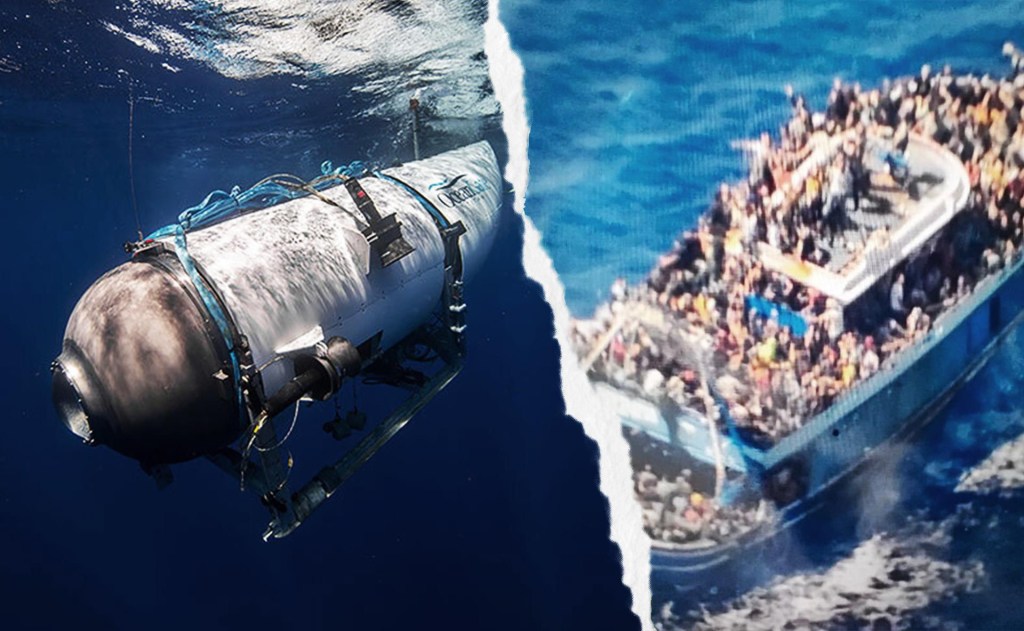
This past week there were two tragedies in the world’s oceans. First, a fishing boat crowded with migrants traveling from Libya to Italy sank in Greek waters. ABC News reported that 100 passengers were rescued, 81 bodies found, but hundreds more were on the boat and most are feared dead. Rescue efforts were insufficient, at best. Although there has been much condemnation of the tragedy, few boats sped to the rescue. I read that Greek authorities did not move to rescue the migrants, even though a coast guard vessel escorted the trawler for hours.
Contrast this with the heroic rescue efforts costing many millions of dollars in the search for five people trapped in a submarine on what was essentially an expensive vacation trip to visit the wrecked Titanic.
The would-be rescuers were correct that the explorers needed to be rescued, and they were right to mourn when it was discovered that they did not survive. But the world was not right in the lackluster rescue efforts on behalf of the hundreds who drowned when their overburdened ship sank.
“Whilst of course we hope so much that the people on board [the submarine] get brought to safety, it does kind of make you question, what’s the difference in terms of how the media is covering it but also in terms of how, you know, the governments and government infrastructure responds. Why is it so different?” said Josie Naughton, co-founder and CEO of Choose Love, an organization supporting refugees around the world.
We know why it’s different. Stories of overloaded migrant ships foundering and sinking have been in the news for years. Many people have died trying to flee to safety in other countries. But how often does a tiny submarine get lost trying to explore the Titanic, which still grips our imagination more than a hundred years after it sank?
There are those who say that comparing the two tragedies is like comparing apples to oranges. I agree, but I am more than willing to compare the world-wide responses to the tragedies. The nations of the world need to do better as they grapple with the thousands of people fleeing their homes for a better life elsewhere. We need to value and respect every life.
Rabbi Brad Artson wrote, “Korach’s flaw was to confuse equal worth with equal skills.” Our flaw today is that we fail to recognize equal worth. A wealthy person has more value than a refugee. Five explorers are worth more than hundreds of people trying to escape poverty.
So many people today are hoping for a better, brighter future for themselves and their families. They are willing to go to great lengths, even risk their lives, in that search. I pray that we and our world’s governments learn to value them and their dreams.

 SRQ Jew
I agree with you. Thank you for shining a light
LikeLike