
Tags
belief, God, High Holidays, joy, Judaism, Rabbi Jonathan Sacks, Succah, Sukkot
My tradition loves seeming contradictions. The holiday of Sukkot is a perfect example. We call it a joyous time but we read Ecclesiastes, written by Kohelet, the world weary guy who begins by saying that all is futile.
On Yom Kippur, the day of atonement that just passed, we wonder whether we will live or die. Sukkot invites us to ask a different question: We ask, as Rabbi Jonathan Sacks put it, “the most profound question of what makes a life worth living. What matters is not how long we live, but how intensely we feel that life is a gift we repay by giving to others. Joy… is what we feel when we know that it is simply a privilege to be alive.”
Life is a gift we repay by giving to others.
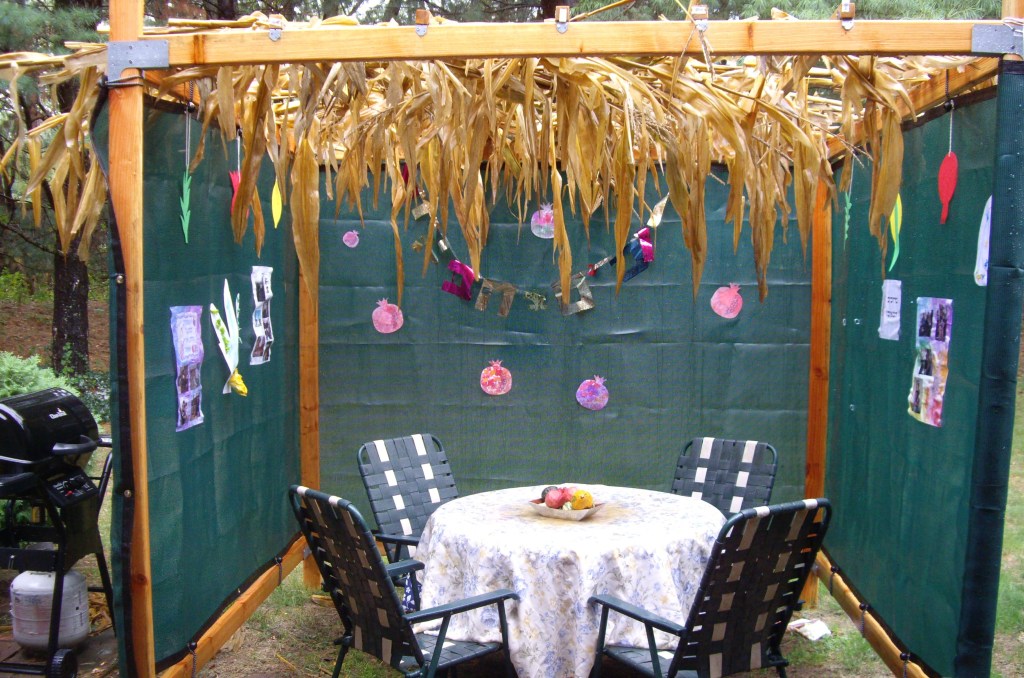
We are taught to experience that joy during Sukkot while dwelling in an impermanent hut, built just for the occasion and meant to be torn down in eight days. Its roof is completely inadequate; it is designed to let both starlight and rain pour in.
I was driving a Christian woman to the airport this morning, and somehow we began talking about belief in God. I said that there are many people who are Jewish and practice Judaism, but do not believe in God. She was shocked. She said, “Who do they think made all of this?”
“That’s not the point,” I explained. “It doesn’t matter who made it, it matters what we do with it. Judaism doesn’t ask us to believe in God. Judaism asks us to do Jewish.”
Doing Jewish means living a moral and ethical life. It means understanding that life is complicated and messy and beautiful, and our job is to contribute to joy.
I love the word joy. Yes, other things are important, like goodness and kindness and tikkun olam, healing the world. But essential to being a good person, I believe, is living joyously, and bringing joy to others.
Coming right in the heels of Yom Kippur, we move from atonement to righteous practice. We share our succah, the temporary home, with friends, family, and honored guests. We decorate it with colors of the season and hang gourds and other fall fruits. We eat our meals there, and some people sleep there. It is a joyous place.
Like most holidays, Sukkot has a particular blessing of gratitude. It thanks God for the opportunity to sit in the succah. That’s it.
Just a chance to sit down, perhaps contemplate the difference between it and our spacious homes. To think about impermanence and how we can best use our remaining days on this earth. To be grateful for the many gifts we have received, not least of which is the gift of life itself.
Night and day. Life and death. Joy and sorrow. Perhaps they are not contradictory but rather complimentary. Each helps us understand and appreciate the other. And each is necessary in our complicated, messy, beautiful, and joyous lives.
 SRQ Jew