
Tags
Am Yisrael Chai, Gaza, Hamas, hostages, Israel, Israeli music festival, Judaism, never again, Nova, October 7, terrorists
I spent Tu B’Shevat this week on a bus to Miami and back—four hours in each direction. Along with 40 others, I traveled to spend just two hours at an exhibit about the Nova music festival, which was brutally attacked in Israel on October 7, 2023.
The exhibition is hard to take. It’s meant to be. At first, it seems almost benign, filled with tents, camping equipment, clothing, sleeping bags, and countless personal items—all left behind in the frantic escape from the terrorists who wrecked so much violence upon festival-goers.
Scattered throughout the exhibit are burned-out cars and numerous video screens. Some videos contain survivor testimonies. Others were filmed that day; some by the terrorists themselves, and some by those in hiding, young people shivering in fear.
The videos are horrifying. The terrorists were merciless and barbaric. I’ll spare you the awful details, some of which I hadn’t known until today. I thought I knew, but what I had heard didn’t begin to touch the truth of that day.
In many ways, walking through the exhibition felt like visiting a Holocaust museum. The capacity for human cruelty is unfathomable. The refrain of “never again” echoes through the halls, but so does the defiant declaration: Am Yisrael Chai —“the Jewish people live.”
This, I believe, is the difference. Of course, the scale is different. The Nazis’ “Final Solution” spanned years and resulted in the murder of more than six million Jews. In the aftermath of World War II, the very future of the Jewish people as a global community felt uncertain.
The terrorist attack on October 7 lasted a single day. At Nova, 411 festival attendees were murdered. In total, nearly 1,300 Israelis were killed, and 250 more were taken hostage to Gaza. Today, the cry of Am Yisrael Chai resounds. It gives heart to all who were wounded by the attack, both those who were there and those of us who weep from afar.
At the entrance to the exhibition, a welcome sign reads: “We invite you to walk together with us along the winding path from the depths of pain and loss to the threshold of action, healing, and hope of community.”
For many, true healing will be impossible until all the hostages are returned to Israel, either alive or to their final rest. Seventy-five hostages remain in Gaza, with 36 of them believed to be dead.
Hope is different. Hope is something we can cling to, even in the darkest times, even when healing feels out of reach.
As Emily Dickinson wrote:
Hope is the thing with feathers—
That perches in the soul—
And sings the tune without the words—
And never stops—at all.
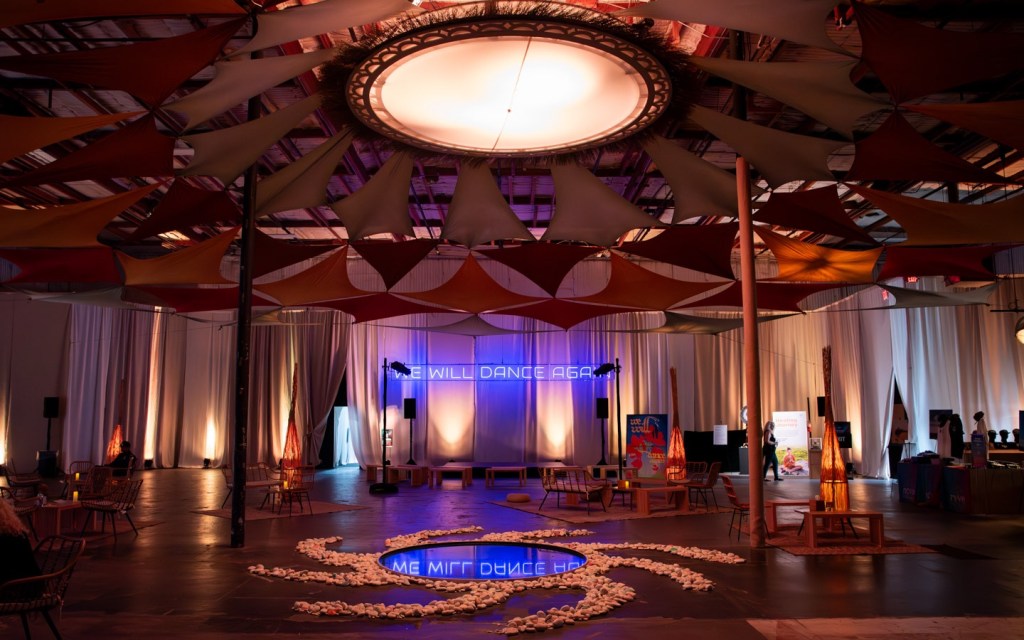
The last room of the exhibition is called the Healing Room. As visitors walk down a long, narrow corridor toward this space — where we met with Nova survivors to hear their stories in person — they see words illuminated on the floor:
Courage. Compassion. Strength. Resilience. Faith. Love. Support. Community.
The Nova survivors have found solace in one another, forming a community of care and mutual support. They are no longer enduring weeks of attending funeral after funeral. Their physical wounds are beginning to heal. Yet, knowing even a fraction of what they witnessed, I struggle to imagine what full healing could look like. Still, I hold onto hope for them.
They mourn, and they wait for the return of the hostages. May they be blessed to find the healing they so desperately need. And may they fulfill their promise: “We Will Dance Again.”
The Healing Room at the Nova festival exhibition.
 SRQ Jew