
Tags
Embedded in nearly every Torah portion is a subtle message about how we interact with each other. Some messages are overt, like this week’s theme about a king, a prophet, and the pursuit of power. But others sneak up on us, quiet reminders to pay attention.
In this portion from the Book of Numbers, a wealthy king hires a prophet to curse the Israelites. He isn’t at war with them, but he’s afraid. Instead of attempting dialogue (gasp! what a concept), he sends Balaam to curse them from afar.
Famously, Balaam doesn’t comply. Instead, he listens to God. The result is the timeless blessing now often recited upon entering a Jewish prayer space: Mah tovu ohalecha Ya’akov, mishkenotecha Yisrael; “How lovely are your tents, O Jacob, your dwelling places Yisrael.”
But another message lies in the story’s most memorable scene.
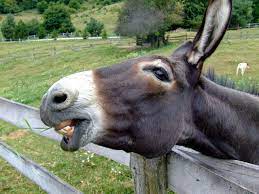
As Balaam travels to meet the king, his normally reliable donkey begins behaving erratically. First she veers off the road. He beats her. Then she crushes his foot against a wall. Another beating. Finally, she simply lies down beneath him. Furious, Balaam beats her a third time.
Then, in a moment that feels like a fairy tale that has been slipped into the Bible, the donkey speaks.
“What have I done to you that you have struck me these three times?”
Balaam, too angry to notice the miracle, shouts back: “You have made a mockery of me! If I had a sword, I’d kill you.”
The donkey, patient despite the abuse, reminds him that she has carried him faithfully for years. “Have I ever behaved like this before?” she asks.
“No,” Balaam admits.
And here’s the key detail: the donkey’s path had been blocked by an angel wielding a sword—something Balaam, for all his prophetic power, could not see. The donkey could.
Instead of noticing her unusual behavior, Balaam tried to force her back into his expectations, blind to what she was trying to show him. Even after the angel reveals itself, Balaam continues to justify his actions, unwilling to admit that his donkey saw what he did not.
It’s an ancient parable, but one that echoes in every era—the “lowly” employee who sees what leadership misses, the overlooked voice that offers wisdom, the dismissed suggestion that could make all the difference.
I once met a U.S. Army consultant just back from Israel, impressed by the IDF’s flat command structure. “Any soldier can talk to any officer,” he said. “If a mechanic sees a way to improve a tank, he can take it straight to the top.”
Wisdom isn’t always loud or expected. Sometimes it comes from the margins—from the donkey, from the mechanic, from the one we’re least likely to hear. The question is whether we are humble enough to listen, wise enough to pay attention.
 SRQ Jew