
Tags
belief, blessings and curses, God, Israel, Judaism, Moses, rabbi, talking to Moses, Torah
As a rabbi who writes a weekly essay, I’ve come to realize that I have much greater freedom since I no longer lead a congregation. Not that I was ever shy about sharing my ongoing struggle with the idea of God.
But today, I find I have both a deeper understanding of the Moses we meet in Deuteronomy, and greater sympathy for him.
I understand him because he, too, is free—free from worrying about how the people will respond to his words. He no longer has to care what they think, or—God forbid—soften his message to placate them.
No wonder God let him speak so openly. By this point in their long partnership, God trusted Moses enough to let him speak for them both. And Moses did just that. Though the Book of Deuteronomy (literally “Words,” D’varim in Hebrew) is spoken entirely in Moses’s voice, it still introduces many new laws—presumably with God’s approval.
That freedom resonates with me. And sometimes it pushes me to look a little more closely. Take the opening verses of this week’s Torah portion:
“See, this day I set before you blessing and curse: blessing, if you obey the commandments of your God that I enjoin upon you this day; and curse, if you do not obey the commandments of your God, but turn away from the path that I enjoin upon you this day and follow other gods, whom you have not experienced.” (Deut. 11:27-28)
Why did I never notice the end of this passage? The blessings and curses are not about being a good or bad person. They are about loyalty to Judaism itself.
The path God wants me to follow is the Jewish path. That works for me. But it doesn’t work for everyone. I cannot accept that anyone should be cursed for not practicing Judaism.
Because the truth is, many people define themselves as Jewish without being particularly observant. They may not go to synagogue, observe Shabbat, pray regularly, or mark the cycles of Jewish time.
And yet, they know they are heirs to a Jewish heritage. They identify as Jewish. They might attend a Passover seder, light a Hanukkah menorah, or simply carry a strong sense of Jewish identity.
Is that enough? For many, yes. For those who want more, resources abound: PJ Library for children, Federation’s adult education classes like the ones I teach, or even YouTube (lots of YouTube).
Moses’s harsh warnings were meant to frighten the Israelites as they prepared to enter the Promised Land. He feared that, without him, they would wander from the path.
I wish I could tell him: “Don’t worry. We made it. It hasn’t been easy—it never will be—but the Jewish people have persisted. We are resilient. We reached the Promised Land, were exiled from countless countries, persecuted, murdered, and still, we returned home to Israel. We are still here. We will be OK.”
We will be OK.
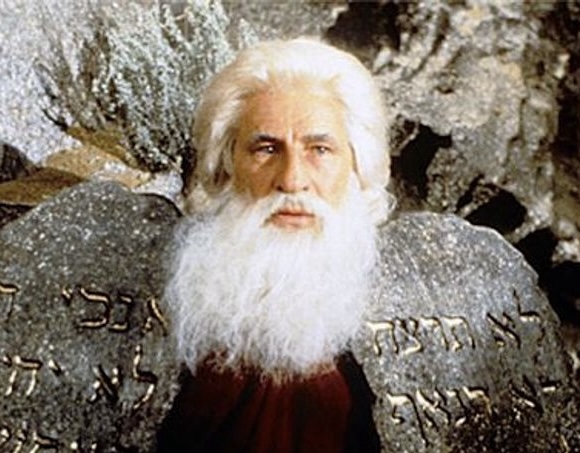
The photo is, of course, Mel Brooks as Moses.
 SRQ Jew