
Tags
For those of us who have just lived through back to back hurricanes, Sukkot is a reminder that change is inevitable. It is a holiday of impermanence, when we build a house that is meant to be taken apart and put away after just a week.
So why would such a holiday be called Z’man Simchataynu, the time of our rejoicing? There is nothing joyous about having everything you own and hold dear taken from you by the winds and rain.
Even those of us who didn’t lose our homes to the storms, were traumatized. We trembled through the night as massive winds raged outside. When daylight finally broke through, we saw the destruction all around us. We lived for hours and days without electricity or air conditioning in the sweltering heat (many for weeks on end).
And yet, the tiny impermanent booths that we construct on Sukkot are meant to be joyous places. Places where we invite friends and family for meals, where we reside briefly, knowing that our real home, our permanent home, is right there.
Rabbi Dovid Bashevkin calls it, “a perfect holiday for a messed-up, broken-down kind of moment in time.”
Just five days ago we were observing Yom Kippur and making heartfelt promises, some of which will be difficult to keep.
Rabbi Bashevkin writes, “That is precisely why the final law of Yom Kippur is to begin building a sukkah. That’s what Sukkot is all about—learning to become comfortable with life’s ever-changing, ever-dissipating, ever-evolving nature. Sukkot picks up the broken promises of Yom Kippur and teaches us how to build with materials that are meant to be broken and rebuilt.”
The booth that we build on Sukkot will not protect us from the elements. We will feel the raindrops, see the stars, feel the breeze. It is perfect for this particular point in time.
As we pick up the pieces of our broken lives, we know that much in the world is broken. Israel is still at war. Hostages still languish in Gaza tunnels. Antisemitism screams its ugly hatred across this nation. The world feels unsafe, like a tottering building in an earthquake.
A post I saw on Facebook claimed, “This is precisely why we need Sukkot, a holiday that reminds us that there’s nothing more whole — or more holy — than a broken world, a world we get to rebuild.”
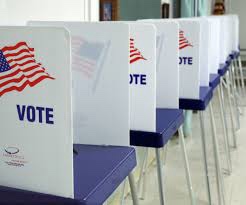
In some two weeks, we Americans will enter into another kind of sukkah, a different booth. It is a voting booth, and it is essential that we participate in its invitation to speak up and speak out about who we want to lead us, and how we want our communities to be shaped. It too is an act of building.
Unlike the succah of the holiday, we will spend only a few moments in the voting booth. But those moments are essential to our democracy.
If you didn’t build a succah this year, find someone who did, or visit a nearby synagogue for a chance to sit for at least a moment. And if you haven’t voted yet, please make sure that you do. You matter.


amen!
LikeLike
Yes!Sent from my iPad
LikeLike
Todah – Y’she Koach! And, Shabbat Shalom.
LikeLike