
Tags
coexistence, Israel, Moses, peace, Promised Land, scouts, Slach L’cha, Torah, war
This week’s Torah portion is the disastrous story of the 12 scouts (or were they spies?) sent into the Promised Land by Moses.
They were told to check out both the agricultural ability of the land, and the military ability of the people there.
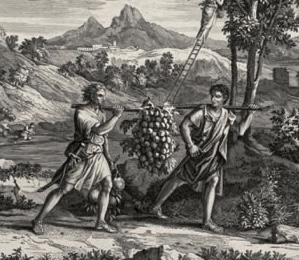
Agriculturally, it was awesome. You probably remember the giant bunch of grapes that it took two men to carry.
But it was also strong militarily. At least, that’s what 10 of the scouts thought.
There is a tiny detail in the story that has always bothered me. There were six different tribes, or groups of people in the land: Caananites, Hitites, Jebusites, Amalekites, Amorites, and Anakites.
I have often said that the number seven is to Jews a “perfect” number. It is a number of completion. The seven day week was established in the beginning of Genesis, and the combined number of the Patriarchs and Matriarchs also is seven.
So why, I wonder, didn’t the Children of Israel simply move into the neighborhood? Was war with the current inhabitants absolutely necessary?
The Torah wants us to believe that we had to go to war so that we could uproot their religions and install ours in their stead.
With all due respect to our sacred text, I don’t think that was the right approach. I don’t think it’s ever the right approach. I am far more inclined to let everyone worship in whatever way they want—without imposing their beliefs on each other. That’s the hard part, of course. We are all convinced that our religion is the right religion, making us essentially intolerant of anyone else’s.
Whoever wrote the Bible—whether humans or God—made a terrible mistake in choosing war over peace. It has set a dangerous precedent, one that haunts us to this very day.
And yet, despite my discomfort with the Torah’s endorsement of military conquest, I also understand the fear that underlies the scouts’ report—the fear of being outnumbered, of being different, of being unwelcome in a foreign land. That fear can make peace feel impossible.
The dream of simply moving into the neighborhood, of coexisting with the six nations rather than displacing them, may feel naïve. But I believe it is a dream worth holding onto. A world in which people of different beliefs and backgrounds can live side by side without conflict or fear is the kind of Promised Land I hope for.
Peace, real peace, is not easy. It requires courage, restraint, and a willingness to see the humanity in the other. It asks all sides to reject the simplicity of us-versus-them and to imagine something better—something messier, perhaps, but also more just.
The Torah gives us the story it gives us. But we are not bound to repeat it. We can learn from it. We can wrestle with it. And maybe, someday, we can write a different kind of ending. One where the grapes are sweet, and the land is good—and no one has to be driven out to make room for someone else.
 SRQ Jew
More timely than ever – every single day. Thank you, Rabbi Jennifer.♥️
LikeLike