
Tags
dystopian America, ICE, Moses, protest, Renee Good, shifrah and Puah, Torah
I cannot stop thinking about the woman who was murdered by an ICE agent in Minneapolis.
They call her a domestic terrorist. I call her a protester—someone who was trying to stand up for members of her community who could not stand up for themselves. Renee Nicole Good was a white woman, and as such she carried privileges that those she defended do not.
As a New York Times opinion columnist wrote this week, “Americans—particularly, let’s be honest, white Americans—might have thought themselves immune from ICE abuses.”
Good may have hoped that her whiteness would be enough to protect her. But ICE was not about to honor her white privilege.
In this week’s Torah portion, we enter an ancient dystopian world where everything has been turned upside down. At the opening of the book of Exodus, the Hebrews suddenly become the Other.
Then, as now, ordinary people of privilege rose up against the violence. Two midwives, Shifra and Puah, were tasked with delivering Hebrew babies—and murdering the males.
They refused.
The king summoned them to explain themselves. What do you do in a moment like that? How do you protect yourself while also protecting those you are sworn to help?
They did the best they could. They lied. They told Pharaoh that the Hebrew women were so strong they gave birth before the midwives could arrive.
Later in the story, another lie saves a life. Pharaoh’s daughter draws the baby Moses from the river and claims him as her own, but she needs a wet nurse. Moses’ sister, Miriam, hovers nearby and offers help—conveniently leaving out the fact that the wet nurse she proposes is the infant’s own mother.
Women have always known what it is to be overlooked, powerless, and prey for angry men. Even in our supposedly modern democratic society, women instinctively understand what it means to be considered second-class, less than.
But women know the odds are against them, and we try anyway. We do what we can. So we should not be surprised that Renee Good went out of her way to stand up for her neighbors. Just as we were not surprised that Shifra and Puah risked everything to protect theirs.
And we should not be surprised that men tried to control them—by any means necessary.
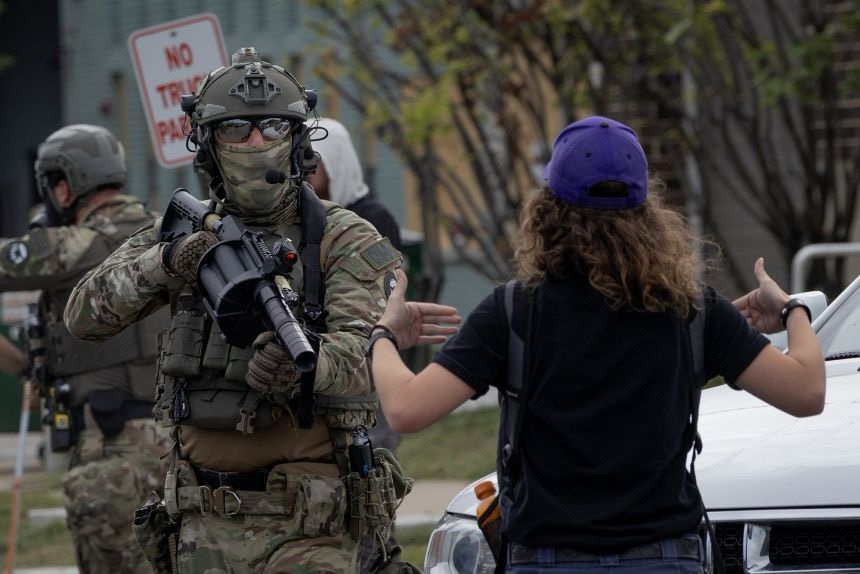
It feels to me that we are living in a dystopian America. Who could have imagined that heavily armed, masked men would roam the streets of our cities, seizing and killing people with impunity? It feels unfathomable—and yet here we are.
This week, a woman complained to me about the many fences, gates, and locks one must pass through to gain access to the Jewish Federation campus where I work. She longs for the old days, when the campus was open and welcoming.
I miss those days too. But they are long gone. The fences, gates, and locks are there to protect me and my colleagues as we try to do the sacred work of community.
And yet today, I do not feel safe.
Because none of us are safe.
 SRQ Jew
I needed these sensitive and strong words of support to carry on this week. Shabbat Shalom, Rabbi Jennifer; Roberta Berson ðð¯ï¸ð¯ï¸ð·ð¶ðâ¡ï¸â¥ï¸
LikeLike